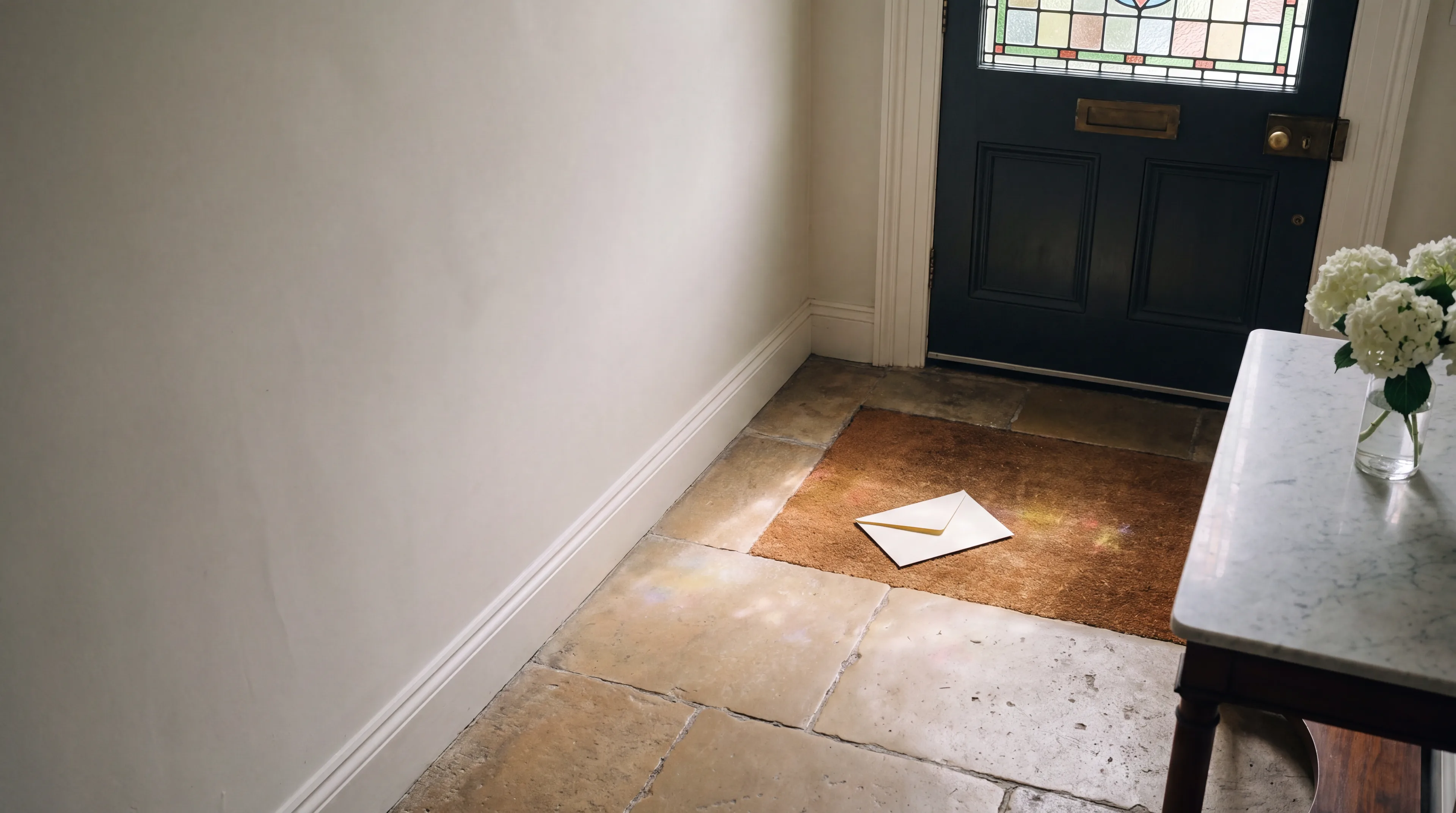
Your neighbour is building.
You have more say than you think.
If work next door affects a wall you share, sits on your boundary, or involves digging near your foundations, the Party Wall etc. Act 1996 gives you real, enforceable protection. Including the right to your own surveyor, paid for by the person doing the building.
If you have been served a notice, you have 14 days to respond. Doing nothing is not neutral. After 14 days a dispute is deemed to have arisen automatically.
We act for adjoining owners across the South West from Bristol and Poole, and across London inside the M25.
It almost certainly costs you nothing.
This is the part most people do not realise, and it changes the whole decision.
Under section 11 of the Act, the building owner pays for the works. And that includes the reasonable fees of both surveyors, because the works are being done for their benefit, not yours. You did not ask for any of this. The Act does not expect you to fund it.
So the question is not whether you can afford a surveyor. It is whether you would rather have a specialist party wall surveyor examining your neighbour's structural drawings on your behalf, or take the word of the surveyor your neighbour found and proposed.
What you get, at the building owner's expense
- A schedule of condition. A dated photographic and written record of your property before anything starts. This is what decides a damage claim.
- A drawings and design review. We read the structural calculations and the method statement, not just the notice.
- A Party Wall Award. A binding document setting out exactly what may be done, when, how, and what happens if it goes wrong.
- Controls on working hours and access. Including when, and whether, anyone may come onto your land.
- A route to remedy. If damage occurs, the building owner must make good, and the Award is how that is enforced.
- Someone accountable. A named surveyor you can actually telephone.
Check it for yourself
Fourteen days, and silence is not neutral.
The single most damaging misunderstanding we encounter is the belief that ignoring a notice makes it go away.
Day 0. The notice is served
Read it carefullyCheck the works described, the sections cited, whether every owner of your property has been served, and whether the notice is actually valid. Invalid notices are common and a defective notice starts no clock at all.Days 1 to 14. Your window to respond
Three optionsYou may consent, dissent and appoint your own surveyor, or dissent and agree to a single surveyor acting for both of you. This is the only point at which you choose freely.Day 15. A dispute is deemed to have arisen
AutomaticIf you have not replied, the Act treats you as being in dispute whether you meant to be or not. Surveyors must then be appointed. If you still do nothing, the building owner may appoint one on your behalf, chosen by them, not by you.Then. The Award
Usually 2 to 4 weeksThe surveyors agree an Award governing the works. Your neighbour cannot lawfully start the notifiable works until it is served. You have 14 days from service to appeal to the county court if you believe the Award is wrong.
Missing the deadline does not end your rights, but it costs you the best of them
Where do you stand?
Pick whichever is closest to your circumstances. Each one sets out your position, your options and the deadlines that apply.
- I've been served a notice
You have 14 days, and silence counts as a dispute. What the notice means and your three options.
- Should I consent or dissent?
Consenting is quick and gives up your Award, your schedule of condition and your protection. An honest comparison.
- Do I need my own surveyor?
Your neighbour's surveyor does not act for you. When an 'agreed surveyor' is fine, and when it is not.
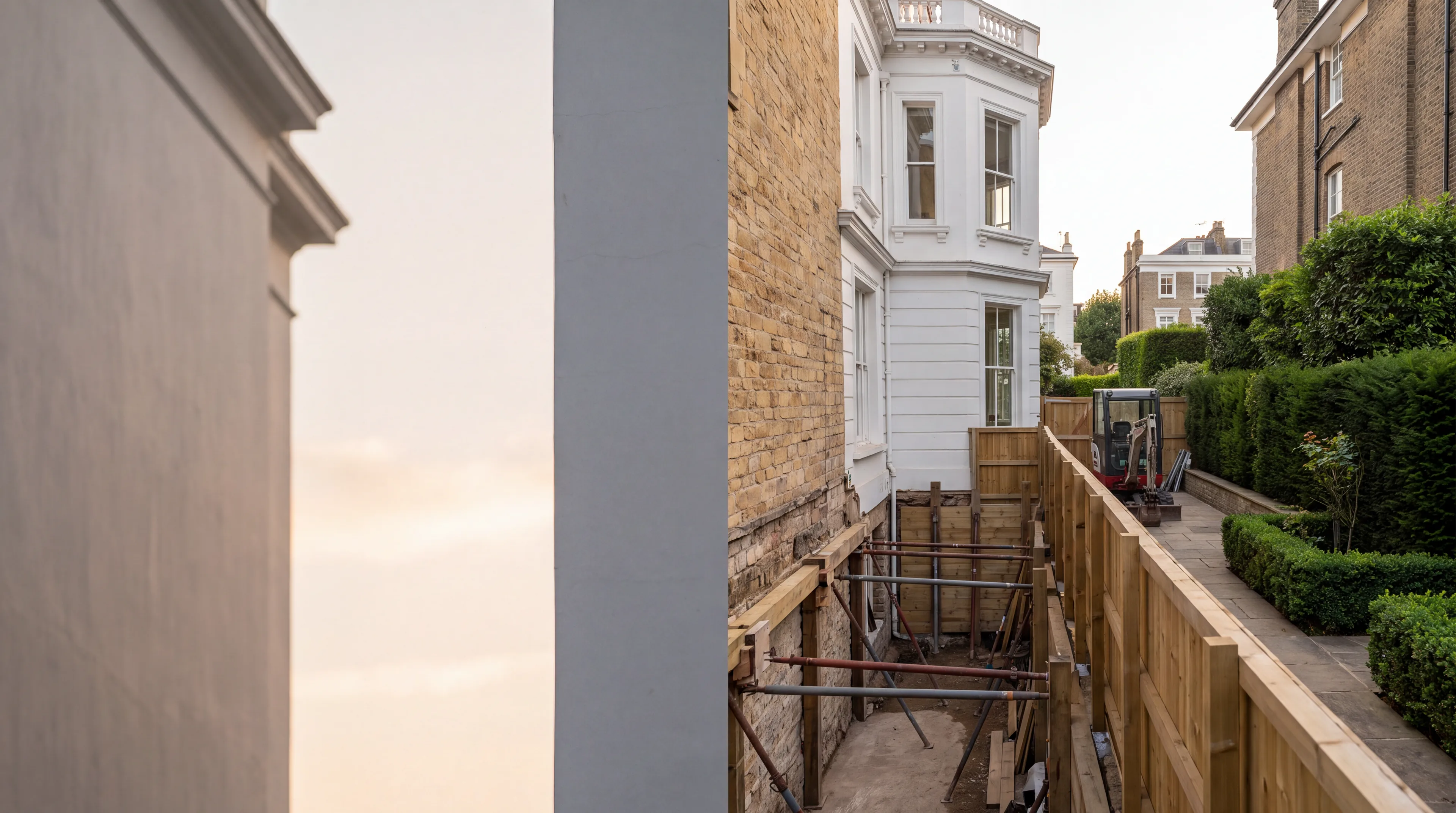
- My neighbour is digging a basement
The highest-risk work the Act covers. Section 6, underpinning, ground movement and what the Award must control.
- My neighbour is building an extension
Planning permission is not party wall consent. What must be notified and what you can require.
- They started without telling me
Work begun without a valid notice is a breach of the Act. Injunctions, retrospective Awards and how fast to move.
- Their work has damaged my property
The building owner must make good. How to evidence a claim and why the schedule of condition decides it.
- What is a schedule of condition?
The dated record of your property before works begin, your single most important protection.
Impartial is not the same as neutral about you.
Party wall surveyors do not act as advocates. Once appointed, a surveyor's duty is to the Act, and an Award must be fair to both owners. That is how it works, and any firm that promises to fight your corner has misunderstood the job.
But that does not make the appointment meaningless, quite the opposite. The surveyor you appoint is the one who inspects your property, records your condition, reads the structural design with your building in mind, and has to be persuaded before the Award is agreed. Two surveyors looking at the same scheme from two directions is exactly the check the Act was designed to create. One surveyor, proposed by the building owner, is not.
| An agreed surveyor | Your own appointed surveyor | |
|---|---|---|
| Who chose them | Found and proposed by the building owner, usually before you were involved. | You did, after speaking to them and deciding they were right for your property. |
| Who inspects your property | The same surveyor, on the same visit, recording both properties. | A surveyor whose only job on that visit is to record your property properly. |
| Who reads the structural design | One person, forming one view, with nobody to test it against. | Two surveyors independently, and the Award is only agreed when both are satisfied. |
| If you disagree with the outcome | There is no second surveyor to refer to. Your route is a county court appeal within 14 days. | The matter goes to the third surveyor, selected in advance, at no cost to you. |
| Can you change your mind | No. Once made, the appointment cannot be rescinded. | No. But you made the choice in the first place, with advice. |
| Cost to you | Normally nil. Cheaper for the building owner overall. | Normally nil. The building owner pays the reasonable fees of both surveyors. |
When we will tell you an agreed surveyor is fine
Adjoining owner questions
Does it cost me anything to appoint my own surveyor?
Normally nothing. Section 11 of the Party Wall etc. Act 1996 puts the cost of the works, and the reasonable surveying fees on both sides, on the building owner, because the works are for their benefit. The two surveyors agree what is reasonable and it is set out in the Award. In the ordinary case an adjoining owner pays nothing at all. There are narrow exceptions, mainly where you ask for work purely for your own benefit or where your conduct causes unnecessary cost, and we will tell you plainly if we think one applies to you.
Can I just use my neighbour's surveyor?
You can. That is what an 'agreed surveyor' means, a single surveyor acting for both owners. It is quicker and cheaper for your neighbour. Whether it is right for you depends on the works. For a straightforward loft conversion it can be perfectly sensible. For excavation, underpinning, basement work or anything structurally significant, we would generally advise appointing your own, because the agreed surveyor was found and proposed by the person doing the building, and once appointed you cannot rescind that appointment.
I have not received a notice but I can see work starting. What now?
Act quickly. Notifiable work started without a valid notice is a breach of the Act, and the courts will grant injunctions to stop it. But that remedy weakens as the works progress and the balance of convenience shifts. In practice the usual route is a firm letter, then a retrospective agreement, with an injunction held in reserve. The important thing is not to wait and see.
Am I allowed to say no?
Not to the works themselves, in most cases. The Act gives your neighbour rights to do certain things, that is the point of it. What you can do is require those works to be carried out under a Party Wall Award: on defined terms, at defined hours, with your property recorded beforehand and made good afterwards, with access controlled and with a surveyor accountable for the detail. The Act does not give you a veto. It gives you protection, and the protection only works if you use it.
What is a schedule of condition and do I need one?
It is a dated photographic and written record of your property taken before your neighbour's work starts. If damage appears later, it is the evidence that decides whether the work caused it. Without one, you are arguing from memory against a contractor's records. It is the single most valuable thing an adjoining owner gets from the process, and it is paid for by the building owner.
How long does all this take?
Once you have dissented and appointed us, a straightforward Award is usually agreed within two to four weeks, depending on how quickly the building owner's side provides drawings and structural details. Complex excavation or basement matters take longer because there is more to check. Your neighbour cannot lawfully start the notifiable works until the Award is served.
Will this make things awkward with my neighbour?
It should not, and a good surveyor works hard to make sure it does not. The Act exists so that neighbours do not have to negotiate structural risk across the garden fence. Appointing a surveyor moves the technical argument off your relationship and onto two professionals who do this for a living. In our experience relationships sour when owners try to sort it out informally and it goes wrong, not when the Act is followed properly.
Speak to a party wall surveyor, free.
Ring us and a surveyor will tell you where you stand, what your deadline is, and what it will cost you. Which, as an adjoining owner, is usually nothing.
- The building owner normally pays your surveyor's reasonable fees
- A named surveyor on your case from start to finish
- We will tell you honestly if you do not need us
No card details. No obligation. Nothing is final until you sign the appointment. A member of our office team reads every message, and a surveyor replies, usually within one working day.
Understand the framework
- The Party Wall etc. Act 1996
Sections 1, 2 and 6 in plain English, and what each one actually gives you.
- What a Party Wall Award should say
The binding document that governs the works, and your right to appeal it.
- Is the notice you received valid?
What a valid notice must contain, and what happens when it does not.