
How a party wall matter
actually runs.
The Party Wall etc. Act 1996 sets out a sequence, and the sequence is the same whether you are the one building or the one living next door. What differs is where you join it, what you decide, and who pays. Here is the whole thing, from both sides.
Our principal is a Chartered Surveyor (MRICS). Every surveyor here is a member of the Faculty of Party Wall Surveyors (FPWS) or RICS, or both.
Building owner: from drawings to first brick.
The single best thing you can do is start early. Party wall is the stage most projects leave until the builder is booked, and it is the one that cannot be compressed.
Establish what is notifiable
Free, at the outsetWe review your drawings and confirm which sections apply. Section 6 excavation is the one most often missed, because modern foundations are usually deeper than the neighbouring Victorian footings.Identify the adjoining owners
Land Registry checkEvery owner of every adjoining property must be served. Including joint owners individually, freeholders, and leaseholders with more than a year unexpired. Getting this wrong invalidates the notice.Serve the notices
2 months (s.2) / 1 month (s.1, s.6)Accurately drafted, correctly served, with plans and sections where excavation is involved. The clock runs from service.The neighbour responds
14 daysConsent, dissent with their own surveyor, or dissent with an agreed surveyor. Silence after 14 days is a deemed dispute.Award agreed, if there is a dissent
Typically 2 to 4 weeksSurveyors inspect, review the design, and agree an Award governing scope, hours, access, protection and making good. You cannot lawfully start the notifiable works until it is served.Works proceed, surveyors remain engaged
Through completionIf something changes or an issue arises on site, the surveyors deal with it under the Award rather than it becoming a dispute between neighbours.
Serve early, not late
Adjoining owner: from envelope to Award.
You join the same sequence at step four, and in the ordinary case you pay nothing at any point along it.
Read the notice and check it is valid
Day 0Every owner served, works accurately described, correct sections and periods, and section 6 plans where excavation is proposed. A defective notice starts no clock.Decide how to respond
Within 14 daysConsent, dissent and appoint your own surveyor, or dissent and agree to a single surveyor. Take advice before consenting, it is the only irreversible option.Appoint your surveyor in writing
Required by s.10(2)The appointment cannot later be rescinded, so choose deliberately. The two surveyors then select a third surveyor as a safety net.Your property is recorded
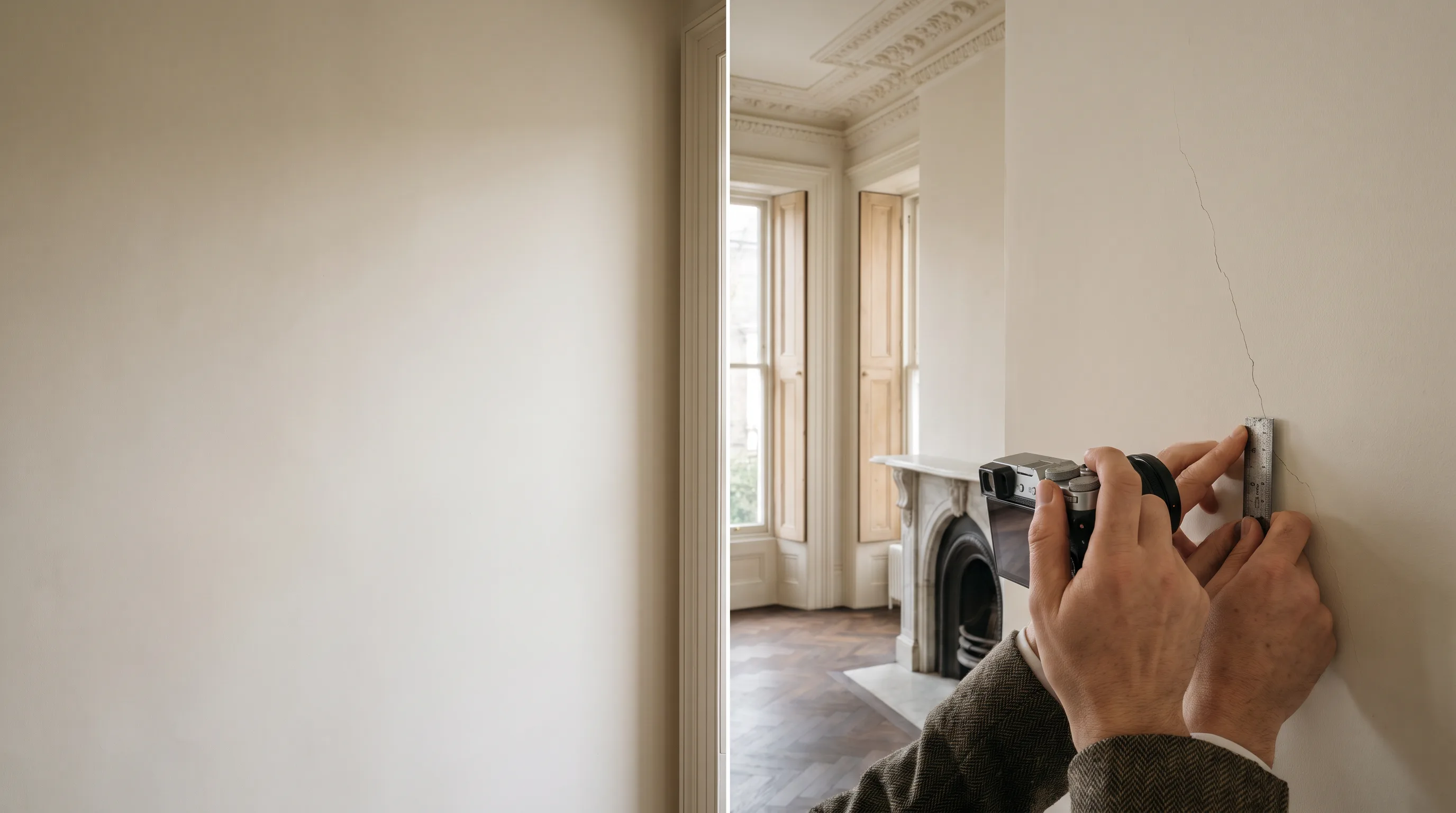
Before any workA full photographic and written schedule of condition, inside and out, at the building owner's expense.The design is reviewed on your behalf
The substantive stageDrawings, structural calculations, method statement and sequencing, read with your building in mind rather than as a generic case.The Award is agreed and served
2 to 4 weeksBinding on both owners. Either may appeal to the county court within 14 days of service. Your neighbour cannot lawfully start until it has been served.
Find your place in it.
Now you have seen the steps, here is who is actually involved, and who pays. Switch perspective to see where you stand, then tap any role to learn what they do and who covers their cost.

Party wall surveyors act impartially under the Act, protecting the process rather than one side.
Process questions
How long does the whole thing take?
From serving notice to being able to start work, plan on two to three months. The notice period alone is two months for section 2 works and one month for sections 1 and 6. If the adjoining owner consents, work can begin when that period expires. If they dissent, add a further two to four weeks for the Award, longer for basements and complex excavation.
What is a deemed dispute?
If an adjoining owner does not respond to a notice within 14 days, section 5 treats a dispute as having arisen, whether anyone intended one or not. It is not a hostile finding, it simply means the surveyor process is triggered. Most 'disputes' under the Act are deemed disputes between neighbours who are on perfectly good terms.
What happens if the two surveyors disagree?
They refer the point to the third surveyor, who was selected at the outset before there was anything to argue about. The third surveyor determines the matter and their decision is binding, subject to a right of appeal to the county court within 14 days. In practice it is rarely needed. The existence of the mechanism is usually enough to concentrate minds.
Can the Award be appealed?
Yes. Either owner may appeal to the county court within 14 days of the Award being served on them. Appeals are uncommon and the court will not simply substitute its own preference. You need to show the surveyors got something wrong. The 14 days is strict, so if you are unhappy with an Award, take advice immediately rather than at the end of the month.
When does the Award expire?
An Award does not have a statutory expiry date, but it authorises the works it describes and no others. If the works do not begin for a long period, or the scheme changes materially, a fresh notice and a new Award are generally needed. As a rule of thumb, if more than a year has passed or the drawings have changed, ask.
Speak to a party wall surveyor, free.
Ring us and a surveyor will tell you where you stand, what your deadline is, and what it will cost you. Which, as an adjoining owner, is usually nothing.
- The building owner normally pays your surveyor's reasonable fees
- A named surveyor on your case from start to finish
- We will tell you honestly if you do not need us
No card details. No obligation. Nothing is final until you sign the appointment. A member of our office team reads every message, and a surveyor replies, usually within one working day.
Related reading
- The Act explained
Sections 1, 2 and 6 in plain English.
- What the Award contains
The binding document, clause by clause.
- Fees and who pays
How section 11 allocates the cost.