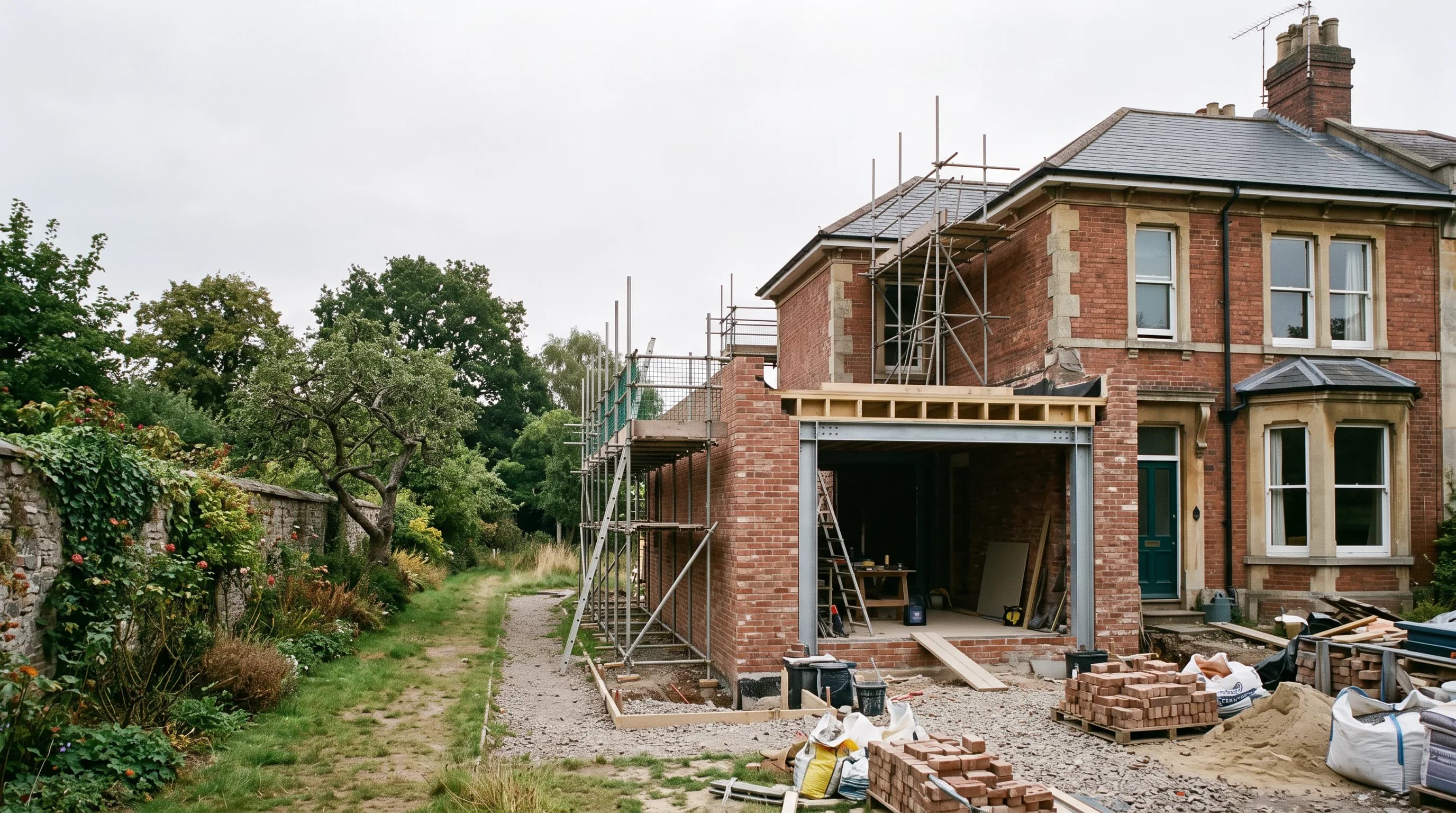
Building on the boundary line
Where a new wall is built up to or astride the line of junction. One month's notice. If built astride, the wall becomes a party wall in which you both have an interest, so you have a say in which it is.
The council granting planning permission tells you nothing about whether your neighbour has complied with the Party Wall etc. Act 1996. They are two entirely separate regimes, and the council has no role in the second one. Most extensions engage the Act somewhere, and a great many are built without anyone realising a notice was required.
A typical rear or side extension can engage all three at once, and a notice that covers only one of them is incomplete.
Section 6 is the one that gets missed
The most common worry we hear is not about cracks. It is about having to live next door to the person afterwards.
It is a fair worry, and the answer is that the Act is designed to prevent exactly that. Following the statutory process moves the technical argument off your relationship and onto two surveyors who do this for a living, disagree professionally, and go home. You are not required to negotiate load paths and foundation depths with someone whose children play with yours.
In our experience relationships between neighbours are damaged when owners try to sort structural matters out informally and something goes wrong. Not when the Act is followed properly. Most building owners understand this perfectly well once it is explained, and many are relieved that the Award protects them too.
No. Planning permission and the Party Wall etc. Act 1996 are separate regimes serving different purposes. Planning is public law about land use and appearance, decided by the council. The Act is private law about structural rights between two owners, and the council has no role in it whatsoever. Permitted development rights make no difference either. An extension built under permitted development still needs party wall notices if it engages the Act.
Very possibly. Building wholly on their own land does not avoid the Act if the foundations are excavated within 3 metres of your building and go deeper than yours (section 6(1)), or within 6 metres and cut the 45-degree line from your foundations (section 6(2)). A single-storey extension with a 1 metre deep trench foundation right up against a shallow Victorian footing will often engage section 6 even though nothing touches the party wall.
That is section 1, the line of junction. If your neighbour proposes to build a new wall up to or astride the boundary line where there is currently no building, they must serve at least one month's notice. You have a say in whether the wall is built astride the line or wholly on their land, and if it is astride, the wall becomes a party wall in which you both have an interest.
Not through the Party Wall Act. The Act controls how notifiable work is carried out, not whether the building should be there at all. Location, size and appearance are planning matters and, where relevant, questions of rights to light or restrictive covenants. All of which sit outside the party wall process. Your surveyor's job is the structural interface, and it is worth knowing which questions belong where.
It is a separate legal right, not part of the Act, and a party wall Award neither grants nor extinguishes it. If an extension would materially reduce daylight to a window you have enjoyed for twenty years or more, that is a rights to light question for a solicitor and a specialist surveyor. We will flag it if we see it, but it is not resolved through the party wall process.
That is a common misunderstanding and it is wrong. The separating wall between two dwellings is a party wall whether it was built in 1885 or 2015. Cutting into it, or excavating near the foundations next door, engages the Act regardless of the age or construction of the building. Timber-frame and lightweight blockwork separating walls are covered exactly the same way.
Describe the works, or send us the notice and any drawings you have. Ten minutes will tell you whether it is notifiable, whether the notice stands up, and what you should do about it.
No card details. No obligation. Nothing is final until you sign the appointment. A member of our office team reads every message, and a surveyor replies, usually within one working day.
Injunctions, retrospective agreements, and how quickly to act.
The comparison, and what consenting quietly gives up.
Sections 1, 2 and 6 in plain English.